
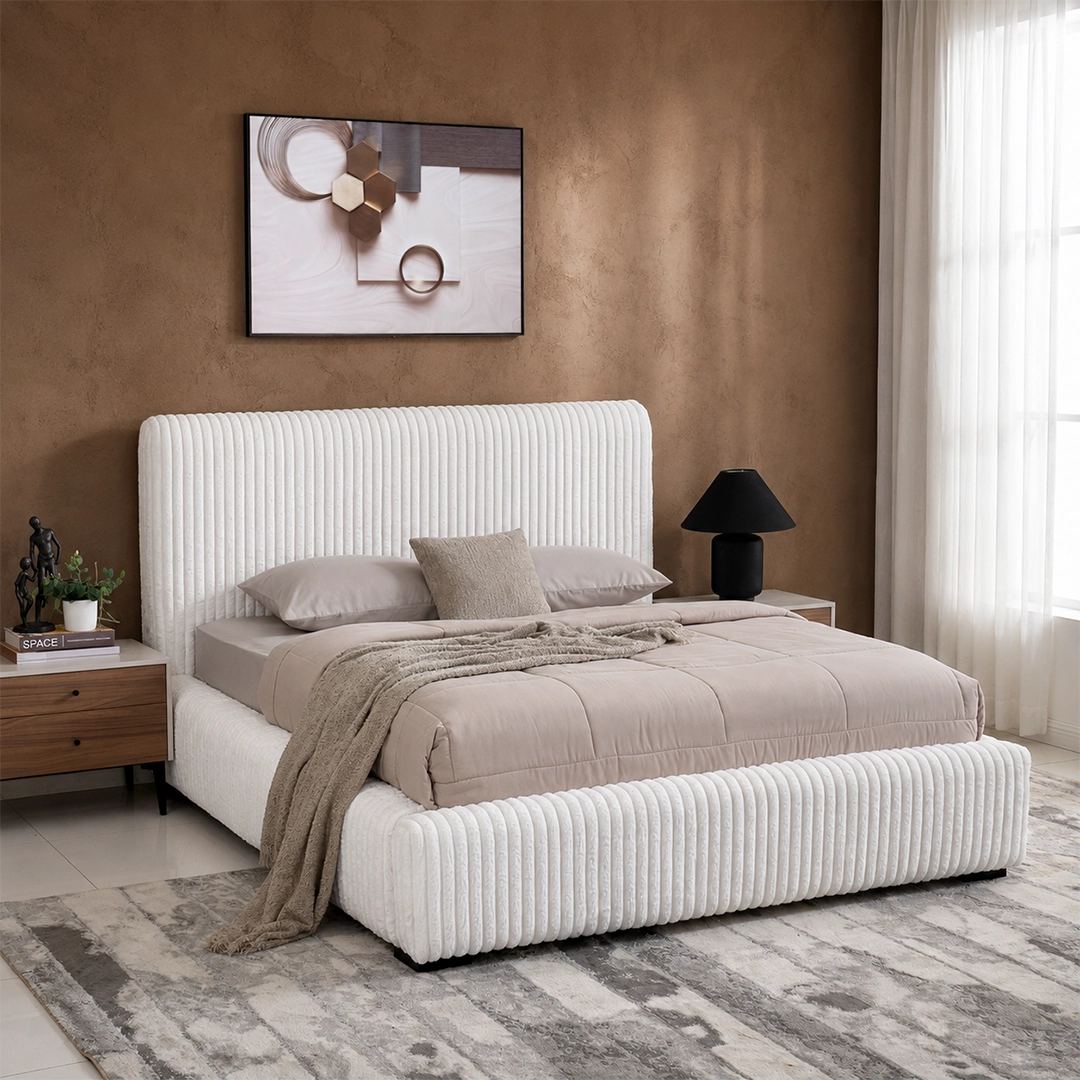
Upholstered Bed vs Wooden Bed: Which Holds Up Better, and For Whom
“Which lasts longer” isn’t quite the right question when comparing upholstered and wooden beds they don’t fail the same way, so they don’t “hold up” by the same measure. A wooden frame degrades structurally over years. An upholstered bed usually looks tired at the fabric long before the frame underneath has any real problem. Knowing which kind of wear you’re actually trying to avoid is what should drive the decision.
What “Holds Up” Actually Means for Each
For a wooden bed, durability is mostly a frame question joint strength, weight capacity, resistance to daily use like sitting on the edge or leaning against the headboard. A well-built wooden frame can genuinely last a decade or more with minimal visible change, since there’s no soft surface to wear out.
For an upholstered bed, durability splits into two separate lifespans: the frame underneath (which behaves structurally similar to any wooden or metal frame) and the fabric on top, which has its own, usually shorter, wear cycle. Fabric fades with sun exposure, flattens with use, and shows stains and marks more visibly than a wood surface ever would. A structurally sound upholstered bed can still look dated or worn simply because the fabric aged faster than the frame.
Where Upholstered Beds Win
Comfort is the clear advantage a padded headboard is genuinely nicer to lean against for reading or working from bed, and the softer visual weight suits bedrooms going for a warmer, more hotel-like feel. Upholstered beds are also quieter in daily use; there’s no wood-on-wood contact at the headboard to creak over time.
They also tend to hide minor bumps and scuffs better than wood does, at least early on a small mark on fabric is often less visible than a scratch on a wood finish.
Where Wooden Beds Win
Wood wins decisively on long-term, low-maintenance durability. There’s no fabric to clean, fade, or replace, and a solid wood frame in particular can often be sanded and refinished if it does show age, extending its life well beyond an upholstered bed’s practical lifespan. Wood also handles spills and stains far more forgivingly wipe it down and move on, rather than spot-cleaning or steaming fabric.
For households with kids, pets, or generally higher day-to-day wear, this maintenance gap tends to matter more over time than the initial comfort difference.
Matching the Bed to Your Household
- Young kids or pets at home: wooden frames are the more forgiving choice spills, scratches, and general roughness are far easier to manage on wood than fabric.
- A calmer household prioritizing comfort: upholstered beds earn their keep here, particularly for anyone who spends real time sitting up in bed reading or working.
- Allergy-sensitive households: wood is generally easier to keep dust-free than upholstery, which can trap dust and allergens in the fabric weave over time.
- Long-term, low-maintenance ownership: wood, especially solid wood, ages more predictably and is easier to restore than fabric.
If durability against everyday household wear is the deciding factor, it’s also worth reading how the underlying frame material itself holds up our guide on bed frame materials in AC-cooled homes covers that separately, since it applies to both upholstered and wooden bed frames underneath.
Making the Decision
Neither option is objectively more durable they wear differently, and the right choice depends on what kind of wear your household actually produces day to day. The Home’s Upholstered Beds and Beds ranges both come in a range of finishes and price points, so once you’ve settled on comfort versus low-maintenance durability, the rest is style.
7. FAQs
Q: Do upholstered beds wear out faster than wooden beds?
The fabric typically shows wear before the frame does, while a wooden bed’s frame and surface age at roughly the same rate, so upholstered beds often need attention (or fabric refresh) sooner even if the structure is still sound.
Q: Are upholstered beds a good choice with kids or pets?
Wooden beds are generally more forgiving for households with kids or pets, since spills and scratches are easier to manage on wood than on fabric.
Q: Can upholstered bed fabric be cleaned or replaced?
Most upholstered beds can be spot-cleaned, and some designs allow the headboard fabric to be reupholstered, though this is a bigger undertaking than simply refinishing a wooden frame.
Q: Which is better for allergy sufferers, upholstered or wooden beds?
Wood is typically easier to keep dust-free, since upholstery fabric can trap dust and allergens within its weave over time.