
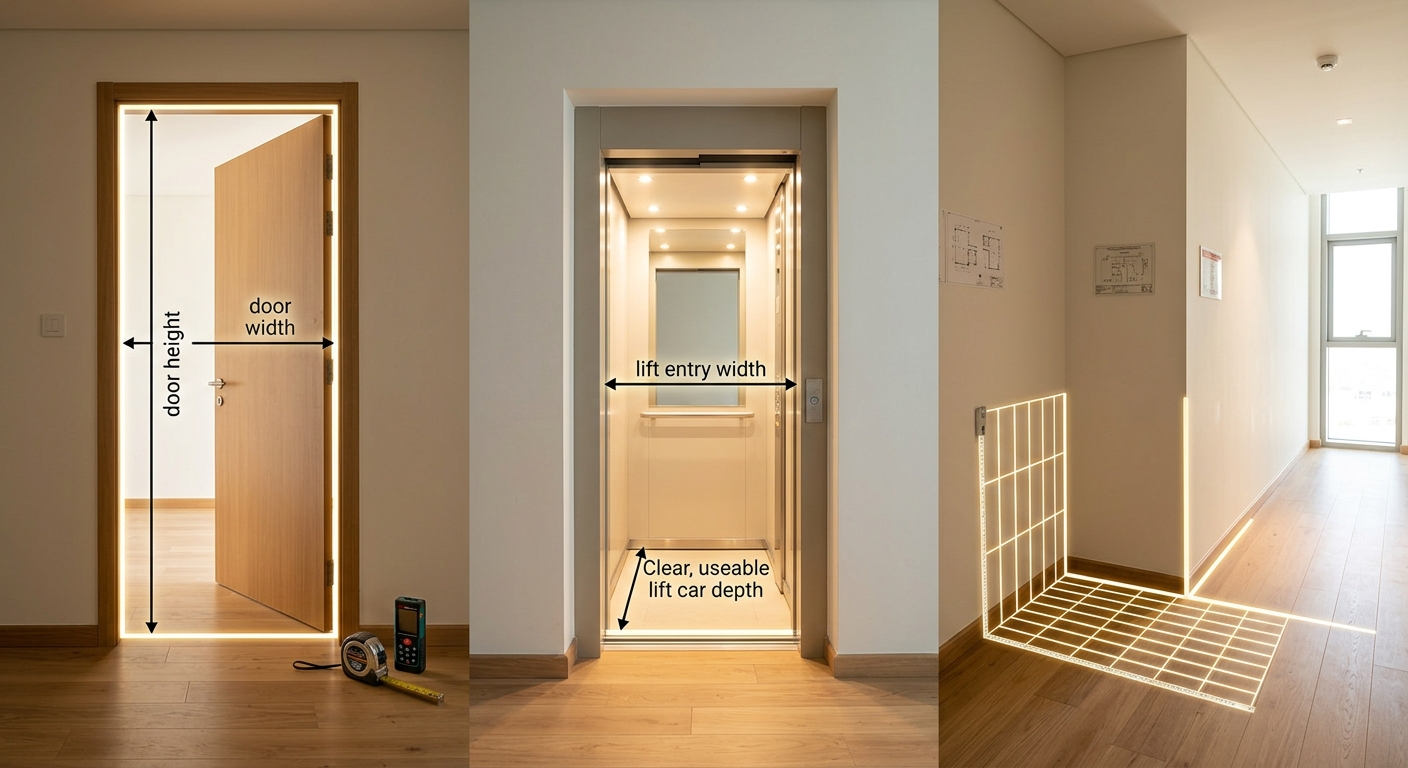
How to Measure Before You Buy: The Doorway, the Lift and the Turn
A customer once measured her living room to the centimetre before ordering a new sofa. It fit the room perfectly. It did not fit through her apartment door. The sofa went back on a truck the same day, and she waited three more weeks for a smaller model.
This happens more often than most people expect, especially in Dubai apartment buildings where hallways are narrow, elevators are compact, and some older towers still have tight stairwells as a backup. Measuring the room is only half the job. The other half is measuring the path the furniture has to travel to get there and that’s where the doorway, lift and turn test comes in.
Why Floor Space Isn’t the Only Measurement That Matters
Furniture doesn’t arrive by teleportation. It has to pass through a front door, sometimes an elevator, and usually at least one corner or narrow hallway before it reaches the room you measured. A sofa, wardrobe or dining table can be well within your room’s dimensions and still get stuck at any one of these three points. Movers and furniture delivery teams check all three before they even lift the piece off the truck and you can do the same in under ten minutes with a tape measure.
The Doorway Test: Will It Actually Get Through the Entrance?
Start with the narrowest doorway between the building entrance and the final room, this is often not your front door, but a bedroom or hallway door further inside. Measure the clear opening width, not the frame: open the door fully and measure between the door leaf and the opposite frame edge. Compare this against the smallest dimension of the furniture piece, usually its depth for sofas and wardrobes.
For large items like 3-seater sofas or wardrobes, check the diagonal depth too, many pieces can be tilted through a doorway that’s narrower than their straight-on width. If the diagonal measurement clears the opening, the piece will usually go through even if it looked tight on paper.
The Lift Test: Elevators, Stairwells and Ceiling Height
If you’re on a higher floor, the elevator becomes the second checkpoint. Measure the elevator cabin’s interior width, depth and door opening, not just the door width, since some cabins are deep but narrow. For very large furniture, ask your building management about a service elevator or goods lift, which is often larger than the passenger one.
If there’s no elevator large enough, staircases become the fallback. Here, ceiling height above the stairs matters as much as stair width, since furniture often has to tilt upward mid-flight. This is one reason many buyers in walk-up buildings choose flat-pack or ready-assembled options that arrive in sections and get built inside the room, it removes the lift problem entirely.
The Turn Test: Hallways and Corners
The final checkpoint is any corner the furniture must turn around, hallway junctions, the turn from a corridor into a room, or a landing between stairs. A piece that clears the doorway can still get stuck here, because turning requires more swing space than a straight pass-through.
A rough rule movers use: the hallway width plus the depth of the piece should comfortably exceed the item’s length at the tightest corner. If that math looks close, it’s worth checking with the delivery team before ordering rather than after.
A Simple Measuring Checklist Before You Order
- Measure the clear opening of every doorway between the entrance and the final room
- Note the diagonal depth of large pieces, not just the straight width
- Measure the elevator cabin and door opening, or the stairwell width and ceiling clearance
- Check hallway width at every corner the furniture must turn
- Compare all four measurements against the furniture’s actual dimensions, listed on the product page , not the “fits the room” assumption alone
Keep this list on your phone when you’re browsing sofas, dining tables or wardrobes online. It takes a few extra minutes and saves the far bigger headache of a return.
Frequently Asked Questions
What is the “doorway, lift and turn” test for furniture?
It’s a three-point check, doorway width, elevator or stairwell access, and hallway corner clearance, used to confirm a piece of furniture can physically reach the room before you buy it, not just that it fits once it’s there.
How do I measure if a sofa will fit through my door?
Measure the clear opening of the doorway (not the frame) and compare it to the sofa’s depth and diagonal depth. If the diagonal measurement clears the opening, the sofa can usually be tilted through even if the straight width looks tight.
Do I need to measure the elevator too?
Yes, if your building has one and you’re above the ground floor. Measure the cabin’s interior dimensions and door opening, and ask about a service or goods elevator for larger pieces.
What if my furniture doesn’t fit through the doorway?
Many wardrobes, beds and modular sofas are designed to be disassembled or arrive flat-packed for exactly this reason. Checking whether a piece is modular or ready-assembled before ordering avoids this problem altogether.
Closing: If you’re unsure how a specific piece will handle your building’s layout, our team at The Home Furniture UAE can talk you through it before you order, whether you’re shopping online or visiting the Dubai showroom.
Find the Right Furniture for Your Home with The Home
Once you have a clear idea of what works for your space, the next step is finding furniture that brings those choices together. The Home offers a wide range of furniture for living rooms, bedrooms, dining spaces, mattresses, outdoor areas and home décor, with options available online and in-store across the UAE. Whether you are furnishing a new home or simply updating one room, you can explore different styles, sizes and finishes to find pieces that suit both your space and everyday lifestyle