
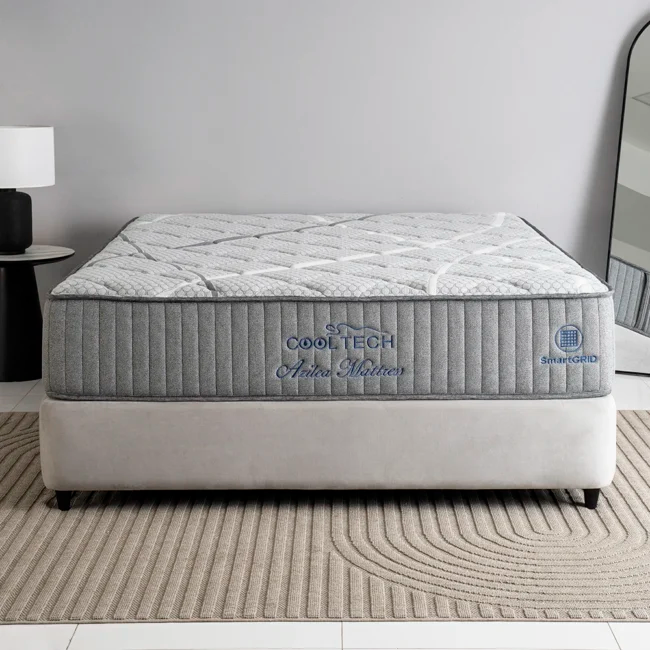
Mattress Firmness Explained: What Soft, Medium and Firm Actually Mean
If you’re not sure what firmness to choose, a medium firm mattress is the safest default for most sleepers it balances pressure relief with spinal support and works reasonably well whether you sleep on your back, side, or switch positions through the night. But the right answer still depends on your body weight, your usual sleep position, and whether you’re dealing with any existing pain.
Shopping for a new mattress can feel confusing the moment you see terms like “plush,” “medium firm,” and “extra firm” listed side by side. Here’s what these terms actually mean for your body, your sleep position, and your morning backache.
What Does Medium Firm Mattress Mean?
A medium firm mattress sits roughly in the middle of the comfort scale, usually rated around 6 to 7 out of 10, where 1 is the softest and 10 is the hardest. It offers enough cushioning to relieve pressure at the shoulders and hips, while still giving enough support to keep your spine aligned.
This is why a medium firm mattress often gets called the “universal” option. It works reasonably well for back sleepers, side sleepers, and combination sleepers who shift positions through the night. If you share a bed with a partner who has different preferences, medium firm is usually the safest middle ground between the two of you.
The Difference Between a Soft and a Firm Mattress
Soft mattress: Contours closely to your body, sinking in at the shoulders, hips, and lower back. Works well for side sleepers and lighter-weight people who need pressure relief on their joints. The downside shows up for heavier bodies or back/stomach sleepers, where a soft surface can lead to spinal misalignment.
Firm mattress: Keeps the sleeping surface flat and resistant, with minimal sinkage. It supports the spine well and suits stomach sleepers and heavier individuals. The tradeoff is less pressure relief, which can feel uncomfortable for side sleepers with sensitive shoulders or hips.
Softness handles pressure relief. Firmness handles structural support. Most people need some of both, weighted differently depending on body weight, sleep position, and any existing pain points.
How to Choose Mattress Firmness
Matching the mattress to your body and habits matters more than picking whatever’s trending. A simple approach:
Know your sleep position. Side sleepers generally benefit from soft to medium mattresses that cushion the shoulders and hips. Back sleepers do well on medium to medium firm. Stomach sleepers usually need firm support to prevent the midsection from sinking.
Factor in your body weight. Lighter sleepers (under 130 lbs) often find firm mattresses too hard, while heavier sleepers (over 230 lbs) may sink too much into a soft one and need firmer support.
Consider existing pain. A softer surface may help with joint pain. Medium firm is frequently recommended for lower back pain specifically.
Test before committing. Many mattress brands offer trial periods of 90 to 365 nights use that window to see how your body actually responds over several weeks, not just one night. If you land somewhere close but not quite right, a mattress topper can shift the feel without replacing the whole mattress, softening a too-firm surface or adding support to one that’s started to feel too soft.
Best Mattress Firmness for Back Pain
For people dealing with chronic back pain, medium firm mattresses are frequently recommended by sleep specialists as the more reliable option. A surface that’s too soft lets the hips sink and the spine curve unnaturally; one that’s too firm creates pressure points that cause you to toss and turn through the night.
Medium firm options typically in the 6/10 range support the natural curve of the spine while still cushioning pressure points. If your back pain is severe or persistent, it’s worth pairing your mattress choice with advice from a physical therapist or physician, since sleep posture is only one piece of the puzzle.
Memory Foam Firmness Varies More Than People Expect
Memory foam mattresses are known for contouring closely to the body, but firmness within memory foam can vary widely from brand to brand. A high-density memory foam layer feels noticeably firmer and more supportive, while a lower-density layer feels plush and slower to respond.
Look for memory foam mattresses that combine a responsive top layer with a firmer support core this hybrid approach gives you the pressure relief memory foam is known for, without the “stuck in quicksand” feeling some all-foam beds create. The Home’s memory foam mattresses range covers a spread of densities if you want to compare a few side by side.
What to Look For in a Medium Firm Mattress
When comparing medium firm options, prioritize:
- A supportive base layer (high-density foam or coils) for spinal alignment
- A responsive comfort layer for pressure relief without excessive sinkage
- Good edge support if you share the bed
- Breathable materials to prevent overheating
- A trial period so you can test the feel at home
A mattress is one of the more significant pieces of furniture you’ll own most people spend close to a third of their life on it. Getting the firmness right pays off in better sleep quality, fewer aches, and a more restful home overall. Browse our full mattress range if you want to compare firmness levels across foam, spring, and hybrid builds in one place.
Frequently Asked Questions
What mattress firmness should I choose? For most people, medium firm is the safest starting point it balances pressure relief with spinal support across sleep positions. From there, adjust softer if you’re a lighter side sleeper, or firmer if you’re a heavier back or stomach sleeper.
What firmness is best for side sleepers? Soft to medium mattresses work best for side sleepers, since they cushion the shoulders and hips while keeping the spine aligned.
Is medium firm the same as medium? No. Medium sits slightly softer on the comfort scale, while medium firm leans toward more support with a bit less sinkage.
Does mattress firmness affect back pain? Yes. Medium firm mattresses are widely recommended for lower back pain because they balance spinal support with pressure relief.
How do I know if my mattress is too soft or too firm? Waking up with lower back pain or a sinking feeling usually points to too soft. Pressure points at your shoulders or hips usually point to too firm.
Can firmness preference change over time? Yes. Body weight changes, aging, injuries, and pregnancy can all shift what firmness level feels comfortable, so it’s normal to need a different mattress every several years.