Solid Wood vs MDF vs Veneer Dining Tables: What Lasts in an Air-Conditioned Home
Dining tables take more daily impact than almost any other piece of furniture hot dishes, spilled drinks, kids doing homework, the occasional dropped fork. Add a constantly air-conditioned UAE home into the mix, and the material underneath the finish matters more than most buyers realize when they’re comparing tables side by side in a showroom.
Three Materials, Three Different Constructions
These three terms get used loosely, so it’s worth being precise. Solid wood is timber all the way through no layering, no composite core. MDF (medium-density fiberboard) is an engineered material made by compressing wood fibers with resin into a dense, uniform board. Veneer is a thin layer of real wood bonded over a core, which is usually MDF or plywood underneath genuine wood on the surface, engineered material below it.
Understanding this matters because “wood” on a product listing can mean any of these three, and they don’t behave the same way over years of daily use.
Solid Wood: The Long Game
Solid wood is the most repairable of the three. Scratches, water rings, and minor heat marks can often be sanded out and refinished, which means a solid wood table can genuinely outlast the other two by years, sometimes decades, with the right care. In a consistently air-conditioned home, solid wood behaves predictably stable, low humidity means minimal expansion or contraction once the table settles in.
The tradeoff is price and weight solid wood tables cost more upfront and are heavier to move, and the wood will still show minor natural movement near unconditioned areas like an open kitchen doorway.
MDF: Stable, But Not Repairable
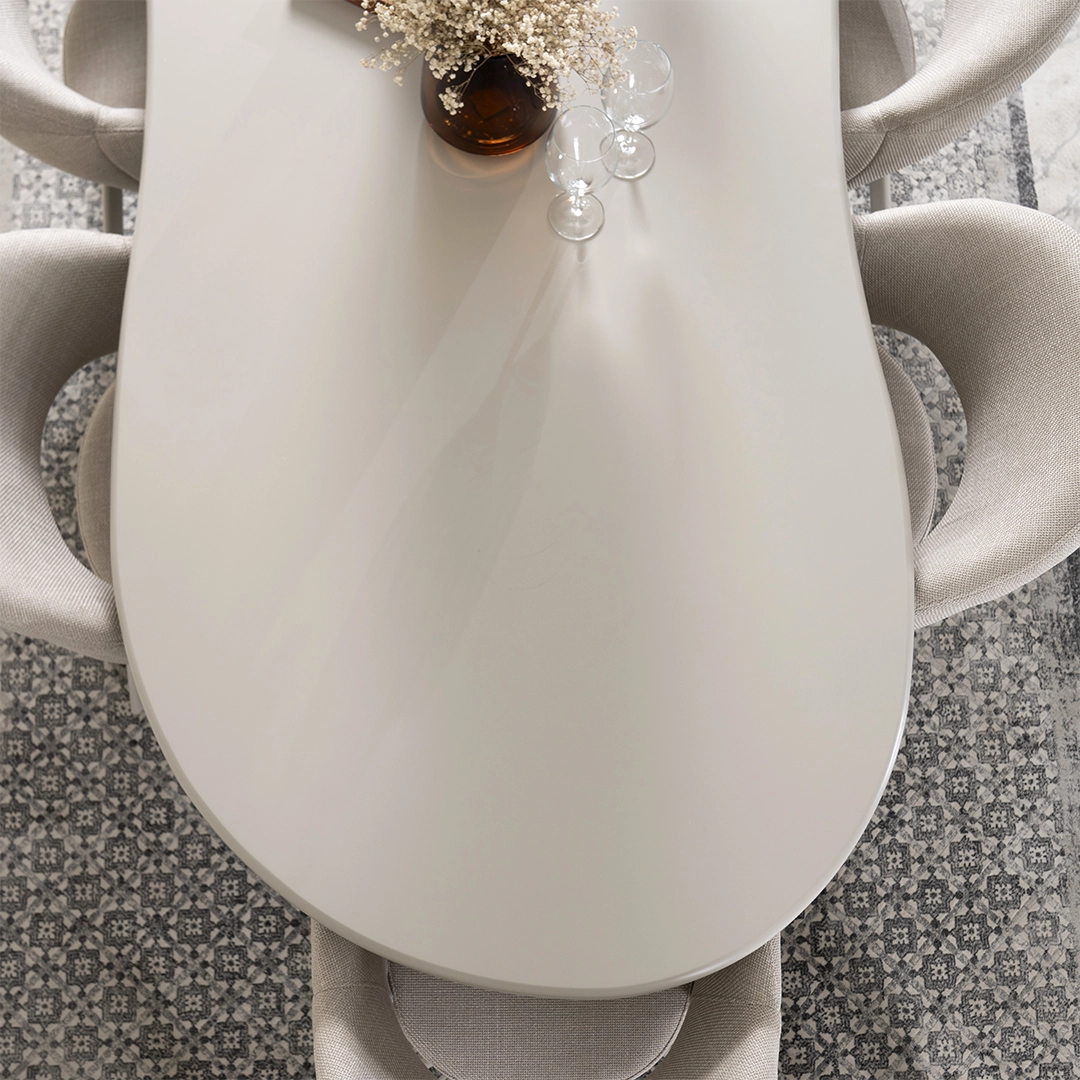
MDF’s biggest advantage is dimensional consistency it doesn’t expand and contract with humidity the way solid wood does, which makes it genuinely well-suited to a stable, air-conditioned environment. It also takes paint and lacquer finishes more evenly than solid wood, which is why a lot of modern, painted-finish dining tables use MDF cores.
Its weakness is damage tolerance. Once the surface finish is chipped or the edge is damaged, MDF can’t be sanded and refinished the way solid wood can the core material underneath doesn’t have the same grain structure to work with, so repair usually means replacement rather than restoration.
Veneer: The Middle Ground
Veneer sits between the two, and does so genuinely well in a stable AC environment. Because the visible layer is real wood over a dimensionally stable MDF or plywood core, veneer tables often resist the humidity-driven warping that pure solid wood can show near less climate-controlled areas of a home, while still giving the natural grain look buyers want.
The catch is thickness-dependent: a quality veneer layer can last for many years and even tolerate light refinishing, but a thin veneer wears through with heavy daily use hot pans, dragging chairs, constant wiping faster than most buyers expect, and once it’s through to the substrate, there’s no bringing it back.
The Honest Tradeoffs
- Daily family use, hot dishes, kids doing homework: solid wood handles this best long-term, since damage is genuinely repairable rather than permanent.
- Budget-conscious, style-first purchase, painted or lacquered finish: MDF is a reasonable, climate-stable choice as long as expectations about repairability are realistic from the start.
- Wanting real wood character without solid wood’s price: veneer is the practical middle ground, but check the veneer thickness and finish quality not all veneer is built to handle daily dining use equally.
- A table placed near a kitchen doorway or balcony access: solid wood will show the most natural movement here; MDF or a well-sealed veneer will stay more visually stable.
None of these three is objectively “the best” the right one depends on how hard the table gets used and how much repairability actually matters to you over its lifetime. The Home’s Dining Tables range spans solid wood, MDF, and veneer construction across different styles and sizes, so once you know which tradeoff suits your household, the rest is about size and seating.
7. FAQs
Q: Does MDF furniture hold up well in the UAE climate?
Yes, in a consistently air-conditioned home MDF is actually quite stable, since it doesn’t expand and contract with humidity the way solid wood can its main limitation is repairability after damage, not climate.
Q: Can a veneer dining table be refinished if it gets scratched?
It depends on the veneer’s thickness a quality, thicker veneer can often tolerate light sanding and refinishing, but a thin veneer will wear through to the core material underneath much sooner.
Q: Is solid wood always the best choice for a dining table?
Not necessarily solid wood offers the best long-term repairability, but MDF and veneer can be perfectly practical choices depending on budget, finish style, and how the table will actually be used day to day.
Q: What’s the difference between veneer and MDF?
MDF is an engineered board material used as a base or core, while veneer is a thin layer of real wood applied over a core (often MDF) so a table can be both veneer and MDF at the same time.