
Marble Dining Tables in a UAE Home: Staining, Heat, Weight and Care
A marble top is one of the few materials that looks better in person than in photos, and also one of the few that asks something of you in return. Knowing what it needs before you buy is the difference between a table that ages well and one that becomes a source of worry at every meal.
Staining and etching are not the same thing
People often use the two words together, but marble reacts to them differently.
Staining happens when a liquid soaks into the stone. Marble is porous, so coffee, red wine, oil and turmeric-heavy sauces can leave marks, particularly on an unsealed or worn surface. Most stains are easier to deal with if you wipe them quickly.
Etching is a chemical change. Marble is mostly calcium carbonate, so acids such as lemon juice, vinegar and some cleaning products dull the surface and leave a pale, rough patch. Etching is not a stain, so wiping it does not remove it. It needs polishing to correct.
Finish makes a difference here. Polished marble shows etching and scratches more clearly, while a honed (matte) finish tends to hide them. If your household cooks and eats on the table daily, a honed top is worth considering.
Heat: marble is tough, but not unlimited
Marble stays cool and handles warm dishes well, but a very hot pan placed straight from the stove can cause problems. Sudden temperature change can stress the stone, and heat can damage the sealer or mark the surface. The simple rule is to use trivets or heat-resistant mats under serving dishes, and never place a pan directly from the hob onto the top. A table near a window with strong afternoon sun may also warm unevenly, so it is worth thinking about placement.
Weight, floors and delivery
Marble tops are heavy, and larger slabs are very heavy. That affects more than delivery.
- Moving it: Heavy tops are usually delivered separate from the base and need two or more people. Check the listing for the top’s weight and confirm it can go through your door and lift. Our guide on fitting a dining table through the door covers the measuring.
- Your floors: Felt pads under the base protect tile and wood floors, and a stable, level surface keeps the top from rocking.
- Rearranging: Once it is placed, plan to leave it there. It is not a table you shift for cleaning.
Everyday care that keeps it looking good
- Use coasters, placemats and trivets
- Wipe spills promptly with a soft, damp cloth, then dry
- Clean with a pH-neutral cleaner made for natural stone, not vinegar, lemon or bleach
- Avoid abrasive pads and powders
- Ask the seller whether the top is sealed, and how often it should be resealed
Light daily care is usually enough, and a stone care professional can polish out minor etching if it appears.
Is marble right for your home?
It suits households that value the look and are happy to use mats and wipe up spills. It suits less well if you have young children who eat at the table with little supervision, or if you want a surface you never think about. If that sounds like you, our comparison of solid wood, MDF and veneer tables may help, and the post on marble, wood and glass coffee tables covers a similar trade-off on a smaller scale.
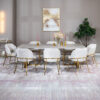
To see marble in person, browse dining sets, including the 8-seater marble top dining set. The Home delivers across the UAE and has a Dubai showroom where you can look at finishes before choosing.
Frequently asked questions
Do marble dining tables stain easily?
Marble is porous, so liquids like wine, coffee and oil can stain it, especially if the top is unsealed. Wiping spills quickly and keeping the sealer maintained helps a lot.
Can you put hot dishes on a marble table?
Warm dishes are usually fine, but very hot pans can stress the stone or damage the sealer. Use a trivet or heat-resistant mat.
What is the best finish for a marble dining table?
A honed (matte) finish hides etching and scratches better than polished, which suits busy family tables.
How do you clean a marble dining table?
Wipe with a soft damp cloth and a pH-neutral stone cleaner, then dry. Avoid vinegar, lemon, bleach and abrasive products.