Best Mattress for Back Pain: What the Evidence Supports (and What It Doesn’t)
“Best mattress for back pain” gets searched constantly, and most of what comes back is either a sales pitch dressed up as advice or a vague claim that firm is always better. The honest answer sits somewhere in between there’s real research behind mattress firmness and back pain, but it’s narrower and less absolute than most product pages suggest.
What the Research Actually Says
The clearest, most consistently repeated finding across sleep and orthopedic research is that medium-firm surfaces tend to outperform very soft or very firm ones for general lower back discomfort. The reasoning is mechanical rather than mysterious: a mattress that’s too soft lets the heaviest part of the body the hips and torso sink further than the shoulders, pulling the spine out of a neutral line overnight. A mattress that’s too firm does the opposite, refusing to yield at the hips and shoulders and creating pressure points that can leave you shifting position all night.
Medium-firm isn’t a marketing term here so much as a genuine middle ground enough surface give to let the body settle without collapsing the spine’s natural curve.
Where the Evidence Runs Out
This is the part most retail content skips. “Firm is best for back pain” is a common claim, but it’s not what the stronger research actually supports pure firmness alone isn’t the deciding factor. What matters more is support whether the mattress keeps the spine aligned which isn’t the same thing as hardness. A mattress can be genuinely supportive while still having a comfortable, slightly softer top layer, and a hard mattress isn’t automatically a supportive one.
It’s also worth being upfront about the limits here: individual results vary considerably by body weight, sleep position, and the specific cause of the back pain, and no mattress is a substitute for medical advice if pain is persistent or severe. Anyone with ongoing or worsening back pain should treat mattress choice as one factor among several, and speak to a doctor or physiotherapist rather than expecting a mattress alone to resolve it.
Matching Support to How You Sleep
Sleep position changes what “supportive” actually means for your body:
- Back sleepers generally do better with a mattress firm enough to prevent the lower back from sinking too far, while still cushioning the natural curve of the spine.
- Side sleepers typically need more give at the shoulders and hips to keep the spine level, since a too-firm surface concentrates pressure exactly where the body is narrowest.
- Stomach sleepers usually need a firmer surface overall, since excess sinkage at the hips in this position tends to strain the lower back the most.
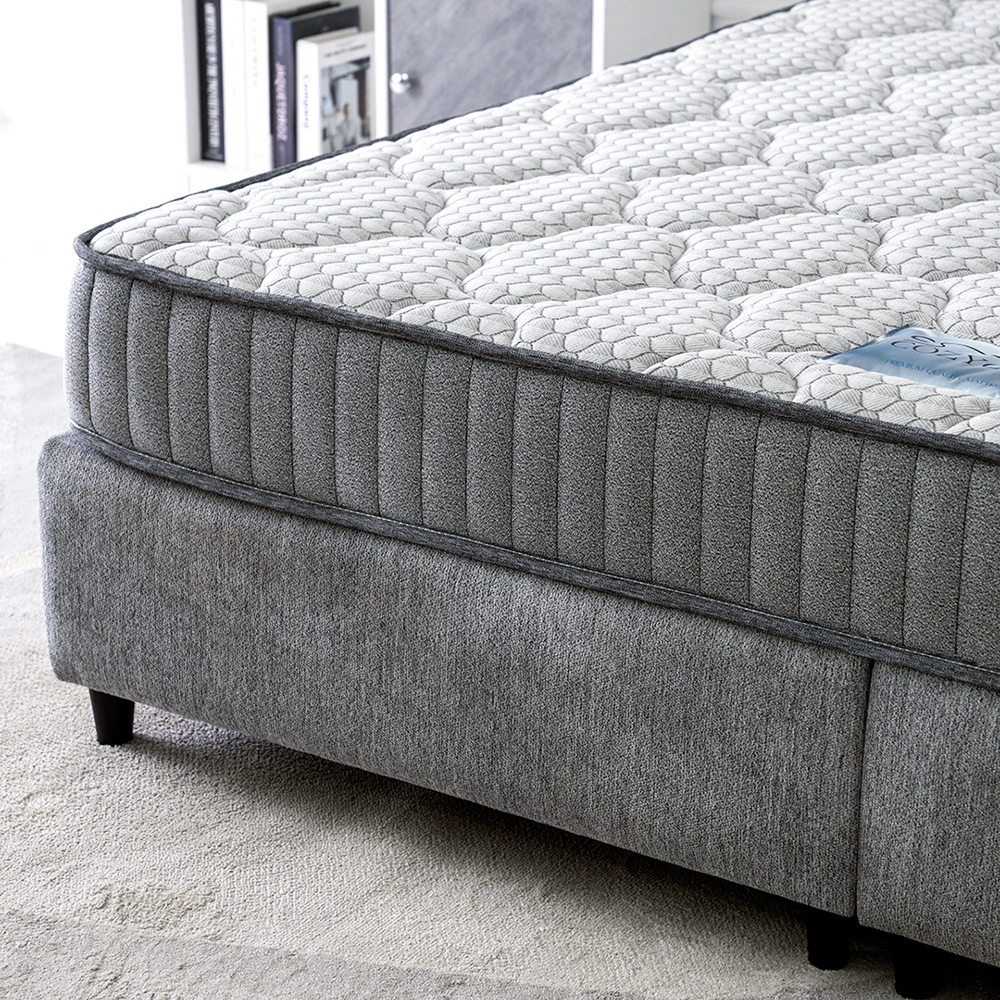
If two people share a bed with different sleep positions or body weights, this is where a genuinely good pocket-spring or zoned-support mattress earns its price the support responds locally rather than uniformly across the surface.
What to Check Before You Buy
- Support layer, not just the top comfort layer. A soft, plush surface can sit on top of a genuinely supportive base check the full construction, not just how it feels for the first ten seconds.
- Trial period and return policy. Back pain response to a mattress often takes a few weeks to become clear, not a few minutes in a showroom.
- Edge support, especially for anyone who sits on the edge of the bed regularly weak edge support can indirectly affect how you get in and out of bed.
- Your actual current mattress’s age and sag. Sometimes the honest answer isn’t “the wrong firmness” it’s a mattress that’s simply past its supportive lifespan.
For anyone weighing this in person, The Home’s showrooms at Ibn Battuta Mall and City Land let you actually lie on different firmness levels before deciding, which matters more for back pain than for most other furniture purchases this isn’t a decision that photos or specs alone can settle.
A Sensible Starting Point
If there’s one takeaway from the research, it’s this: look for medium-firm support with a genuinely supportive core, matched loosely to your sleep position, and give any new mattress a few weeks before judging it. From there, The Home’s Mattresses range spans foam, pocket spring, and bonnell spring builds across a range of firmness levels, so you can compare support types directly.
7. FAQs
Q: Is a firmer mattress always better for back pain?
Not necessarily the stronger evidence points to medium-firm surfaces offering the best general balance, since very firm mattresses can create pressure points rather than resolving them.
Q: How long does it take to know if a mattress is helping with back pain?
Most guidance suggests giving a new mattress several weeks, since the body needs time to adjust and short-term impressions can be misleading.
Q: Does mattress firmness matter more than sleep position?
They work together the right firmness depends heavily on whether you’re a back, side, or stomach sleeper, so there’s no single firmness that suits everyone.
Q: Can a mattress alone fix chronic back pain?
No a supportive mattress can help reduce contributing factors, but persistent or severe back pain should be discussed with a doctor or physiotherapist rather than addressed through mattress choice alone.