
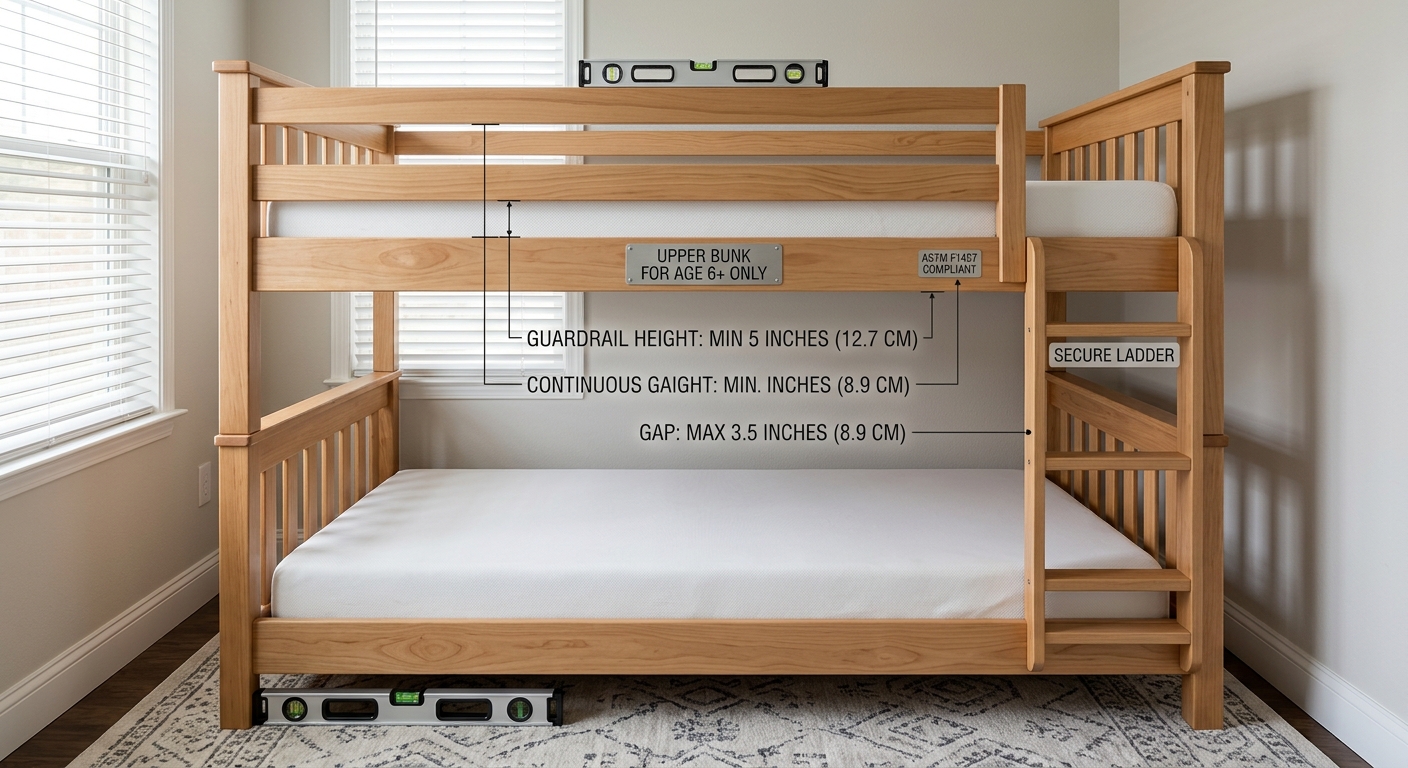
Bunk Bed Safety Standards: Age Limits, Guardrails and What to Check
Your child has just asked for a bunk bed. Maybe it’s to free up floor space for a study desk, maybe two siblings are finally sharing a room, or maybe it’s simply what all their friends have. Before it goes into the cart, it’s worth spending five minutes understanding what actually makes a bunk bed safe because not every bed marketed as a “bunk bed” is built to the same standard.
Most bunk bed injuries trace back to the same three things: a child using the top bunk before they’re ready, guardrails that don’t do their job properly, and structural gaps a small body or head can slip through. Here’s what’s actually worth checking.
What Age Is Safe for a Top Bunk?
There’s no UAE-specific law setting a minimum age for top bunk use, but international safety bodies, including the US Consumer Product Safety Commission, commonly recommend that children under six shouldn’t sleep on the top bunk. The reasoning isn’t arbitrary, it comes down to coordination and balance. Younger children move around more in their sleep, climb ladders less carefully, and are more likely to lean against a guardrail without realising the risk.
Age is a starting point, not the whole picture. A cautious seven-year-old may handle a top bunk fine, while a boisterous nine-year-old might still be better off on the bottom. If you have children sharing a room with a noticeable age or size gap, it’s usually more sensible to put the younger or lighter child on the bottom bunk regardless of what the “recommended age” says.
Guardrail Height and Coverage: What the Standards Actually Say
This is where a lot of budget bunk beds cut corners, and it’s the single most important thing to check before buying. Recognised furniture safety benchmarks, such as ASTM F1427 in the US and EN 747 in Europe, which reputable manufacturers design against, call for guardrails on both long sides of the top bunk, not just the side facing the wall. Mattresses shift over time, and a child pushed up against a wall today may not be tomorrow.
The guardrail should sit a meaningful height above the mattress surface, with no gap wide enough for a child’s torso or head to pass through, typically no more than around 3.5 inches (9cm) between rail slats or between the rail and the mattress. When you’re browsing in-store or online, don’t just glance at the bed, check that the rail actually spans the full length of the top bunk on both sides, not a short decorative rail bolted to one corner.
A Pre-Purchase Safety Checklist for Bunk Beds
A few extra minutes of checking saves a lot of worry later. Before you buy:
- Ladder angle and grip – it should be angled, not vertical, with wide rungs and a secure attachment point, not just resting against the frame
- Mattress fit – the mattress should fit the frame exactly, with no side gaps; an undersized mattress is one of the most common (and overlooked) safety issues
- Weight rating – ask for the manufacturer’s stated weight limit for the top bunk, especially if an adult will occasionally use it too
- Frame stability – give the assembled bed a firm shake test; any wobble at the joints is a warning sign
- Warning label – genuine safety-compliant bunk beds usually carry a visible label with age and weight guidance
- Room fit – in a lot of Dubai apartments and villa kids’ rooms, ceiling height and ceiling fan clearance matter as much as floor space; leave enough headroom above the top bunk so a child sitting up doesn’t reach the fan or a low AC vent
If a bunk bed is missing more than one of these, it’s worth looking elsewhere, no matter how good the price looks.
Frequently Asked Questions
What is the minimum age for a child to use a top bunk?
Most safety guidelines recommend children be at least six years old before sleeping on a top bunk, based on typical coordination and balance development at that age.
How high should bunk bed guardrails be?
Guardrails should run the full length of both sides of the top bunk and extend well above the mattress surface, with no gap large enough for a child to slip through generally under 3.5 inches (9cm).
Are bunk beds safe for small apartments in the UAE?
Yes, when chosen carefully. Bunk beds are one of the most space-efficient options for shared kids’ rooms in UAE apartments, but check ceiling height and fan clearance before buying, not just floor footprint.
Can two children of different ages share a bunk bed safely?
Generally yes, as long as the younger or smaller child takes the bottom bunk, and the top bunk user meets the recommended minimum age and weight guidelines.
Choosing the right bunk bed isn’t just about how it looks in the room it’s about giving your kids a bed that’s genuinely safe to grow into. If you’d like to see guardrail height and ladder design in person before deciding, you’re welcome to visit our Dubai showroom, or browse our Kids’ Bedroom Furniture collection online with delivery across all seven emirates.