Foam vs Pocket Spring: Which Mattress Construction Suits You?
Two people can sleep on the exact same mattress and have completely different opinions of it , which is usually the first sign that “foam or spring, which is better” is the wrong question. The better question is which construction matches how you sleep, your body weight, and what you’re actually trying to fix, whether that’s overheating at night or waking up every time your partner rolls over.
How Each Construction Actually Behaves
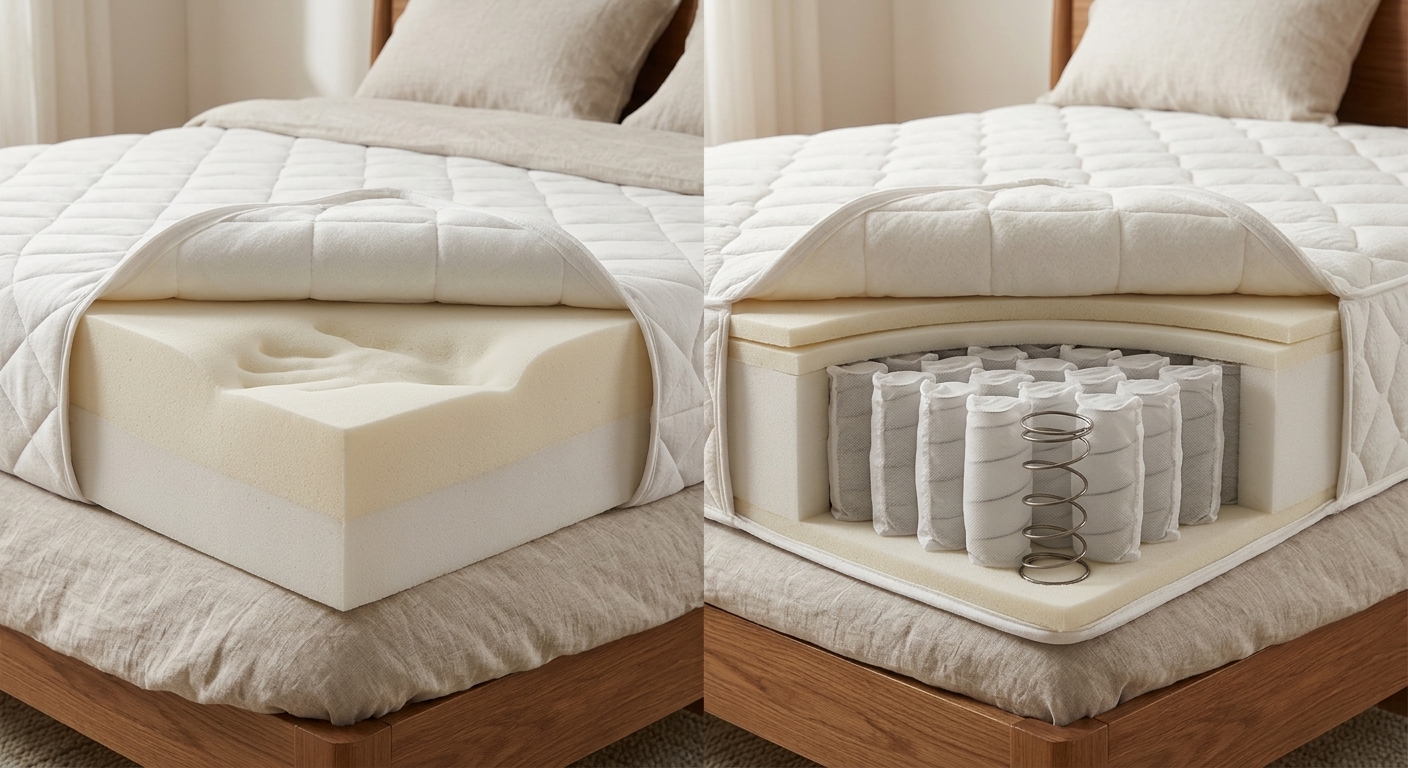
Foam mattresses respond to pressure by slowly contouring around the body, which is why they feel like they’re “hugging” rather than pushing back. Pocket spring mattresses work differently , each spring is individually wrapped and compresses independently, so the surface responds locally rather than sinking as one continuous layer.
| Foam | Pocket Spring | |
| Feel | Contouring, slow response | Bouncier, more responsive |
| Motion transfer | Very low , barely noticeable if a partner moves | Low, but slightly more than foam |
| Airflow | Retains more heat, especially dense foam | Generally cooler, more airflow through the coils |
| Best for | Pressure relief, side sleepers, lighter body weights | Heavier body weights, back/stomach sleepers, hot sleepers |
Where Foam Wins
Foam earns its reputation with pressure relief. If you’re a side sleeper, the way foam cradles the hips and shoulders reduces pressure points more consistently than a spring surface tends to. It’s also the quieter, more motion-isolating option genuinely useful if you share a bed with someone who moves a lot at night, or if you’re a light sleeper generally.
The trade-off is heat. Dense foam holds body heat more than a spring core does, which matters more in the UAE than in cooler climates a foam mattress in a room that isn’t consistently air-conditioned overnight can feel noticeably warmer by the morning.
Where Pocket Spring Wins
Pocket spring tends to suit heavier body weights and back or stomach sleepers better, since the individual coils respond with more immediate support rather than slow contouring , there’s less sense of “sinking in” over the course of the night. It’s also the cooler option by construction, since air moves through the coil layer rather than getting trapped in a dense foam block.
The trade-off here is motion transfer. Even well-made pocket springs move slightly more than foam does, so if a restless partner is a real issue in your household, this is worth weighing.
A Few Things Worth Knowing
- Hybrid builds exist for a reason. A mattress that combines pocket springs with a foam comfort layer on top is a genuine middle ground, not a marketing gimmick you get spring-level support with some of foam’s pressure relief.
- Body weight matters more than most people expect. Lighter sleepers often find pure foam plenty supportive; heavier sleepers frequently find foam alone starts to feel like it’s sinking rather than supporting, which points toward spring or hybrid.
- Lifespan differs too. Pocket springs generally hold their shape longer under consistent heavy use, while foam can show body impressions sooner, especially lower-density foam.
Making the Call
If pressure relief, quiet, and a softer feel matter most to you, foam is the stronger starting point. If you run warm at night, sleep on your back or stomach, or share a bed and want firmer, more responsive support, pocket spring is worth prioritizing. And if you’re torn, a hybrid construction is built specifically to split the difference.
The Home’s Foam Mattress and Pocket Spring Mattress ranges both come in a spread of firmness levels, so once you know which construction fits, the next decision is just firmness which is a much shorter conversation.
7. FAQs
Q: Is pocket spring better than foam for back support?
Not universally pocket spring tends to suit back and stomach sleepers and heavier body weights better, but foam can still provide strong support depending on its density and how it’s layered.
Q: Does foam mattress sleep hot in the UAE?
Dense foam does retain more heat than pocket spring construction, which is worth factoring in if your bedroom isn’t consistently air-conditioned overnight.
Q: What’s a hybrid mattress?
A hybrid combines a pocket spring support core with a foam comfort layer on top, aiming to offer spring-level support with some of foam’s pressure relief.
Q: Which lasts longer, foam or pocket spring?
Pocket springs generally hold their shape longer under regular heavy use, while lower-density foam can develop body impressions sooner.